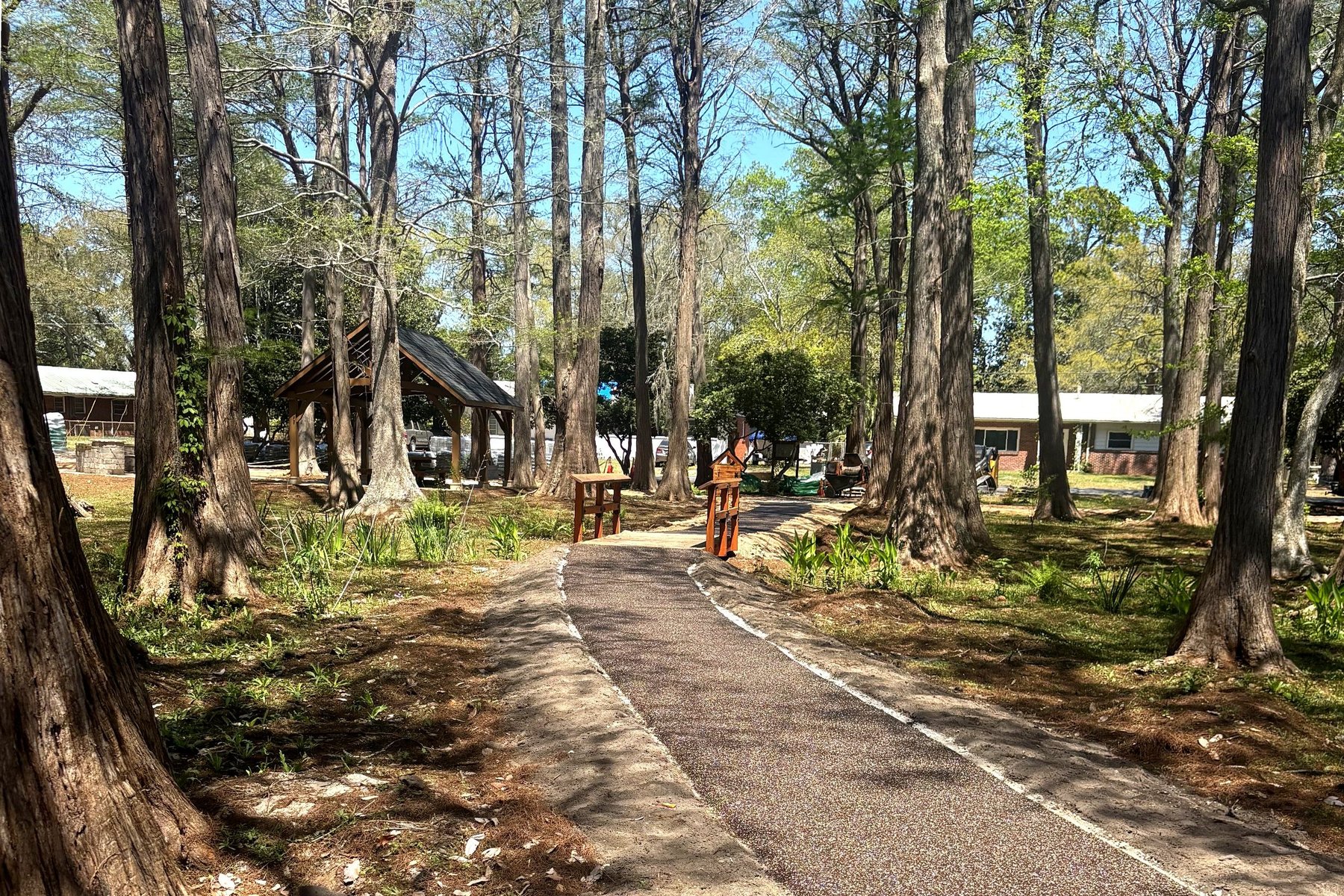
Architectural pavement
Exposed natural aggregate, poured in place, with a natural stone look. Same paths as CP: greenways, trails, park paths, sidewalks, and tree wells.
- LiftsAP-150, AP-200, AP-250
- FinishTextured, matte, stone-forward
- BinderPolyurethane, 11% min.
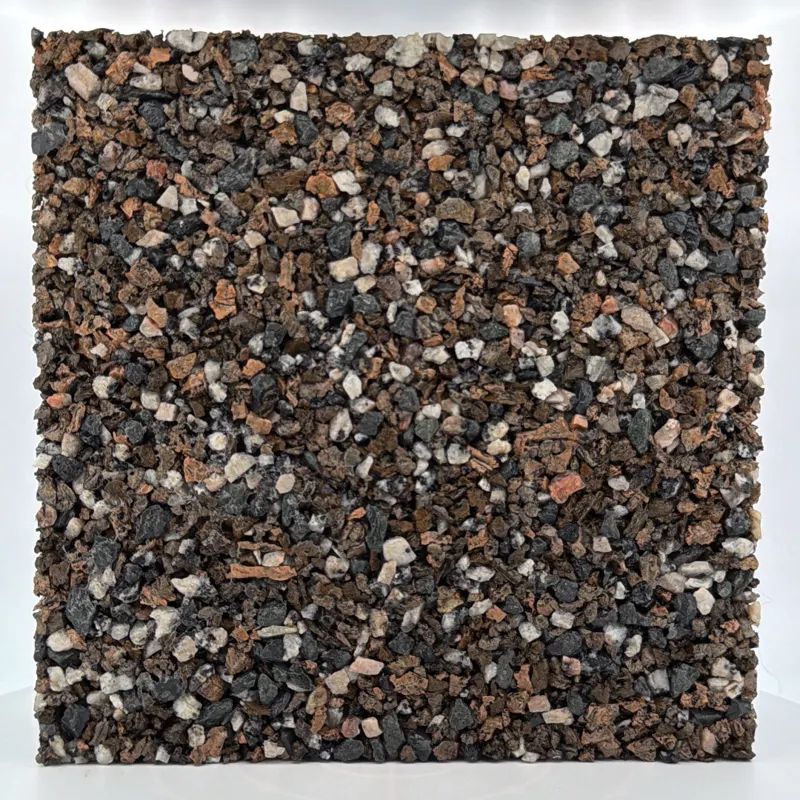
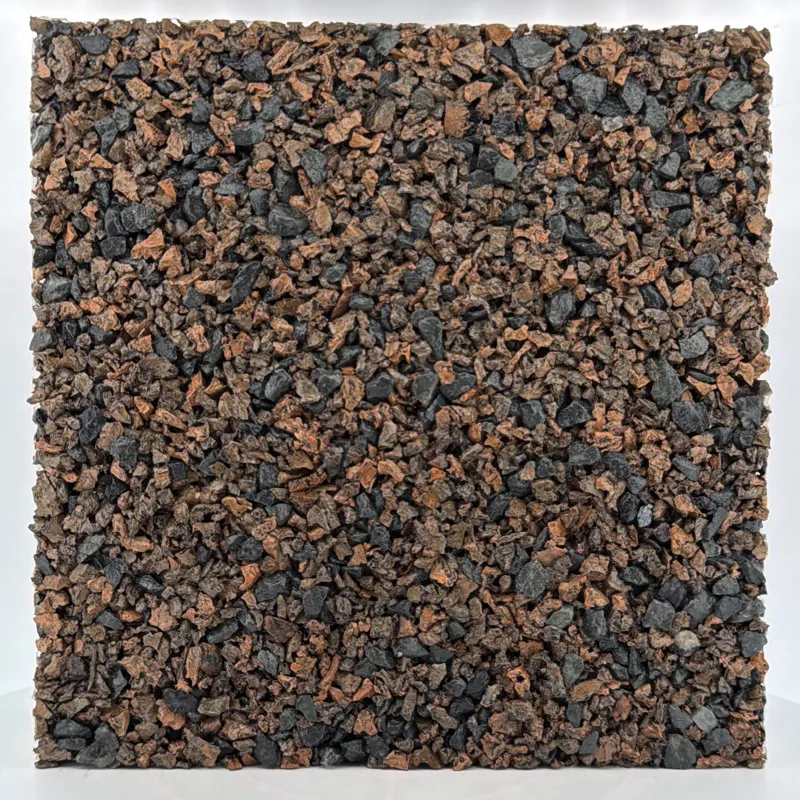
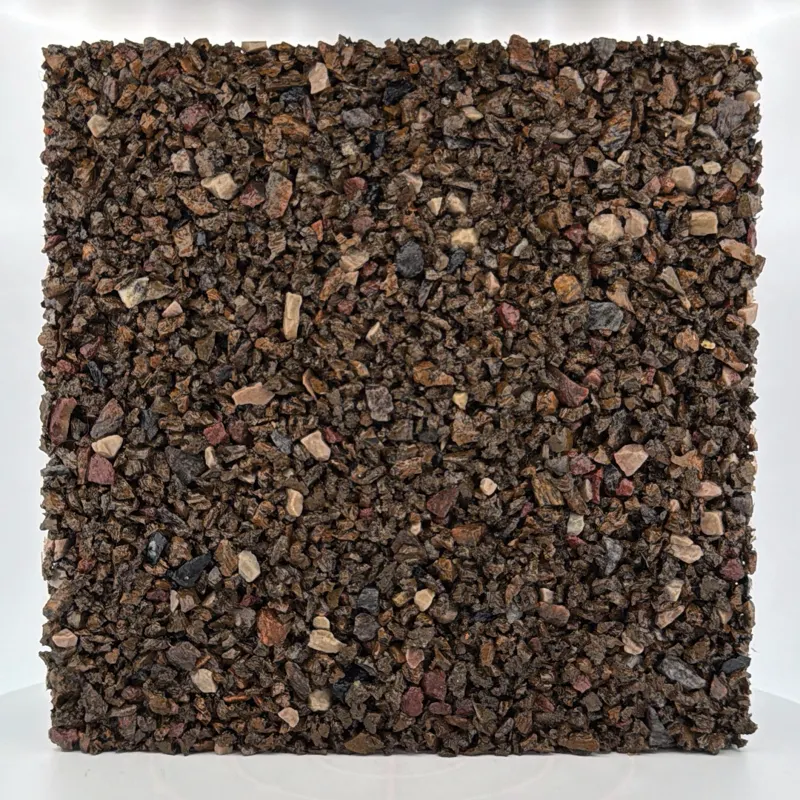
- PalettesSand Dune
Coastal Granite
Charcoal Earth
Natural Trail - UsePedestrian only
From the AP cut sheet
AP and CP are used on the same paths. The lines below quote the AP cut sheet.
- Lifts. AP-150 at 1.5 in (38 mm), AP-200 at 2.0 in (51 mm), AP-250 at 2.5 in (64 mm).
- Finish. Textured, matte, stone-forward.
- Binder. Moisture-cured polyurethane. Minimum 11 percent by weight.
- Palettes. Sand Dune, Coastal Granite, Charcoal Earth, Natural Trail.
- Use. Walking paths and trails, park circulation, public pedestrian spaces. Not for vehicles.
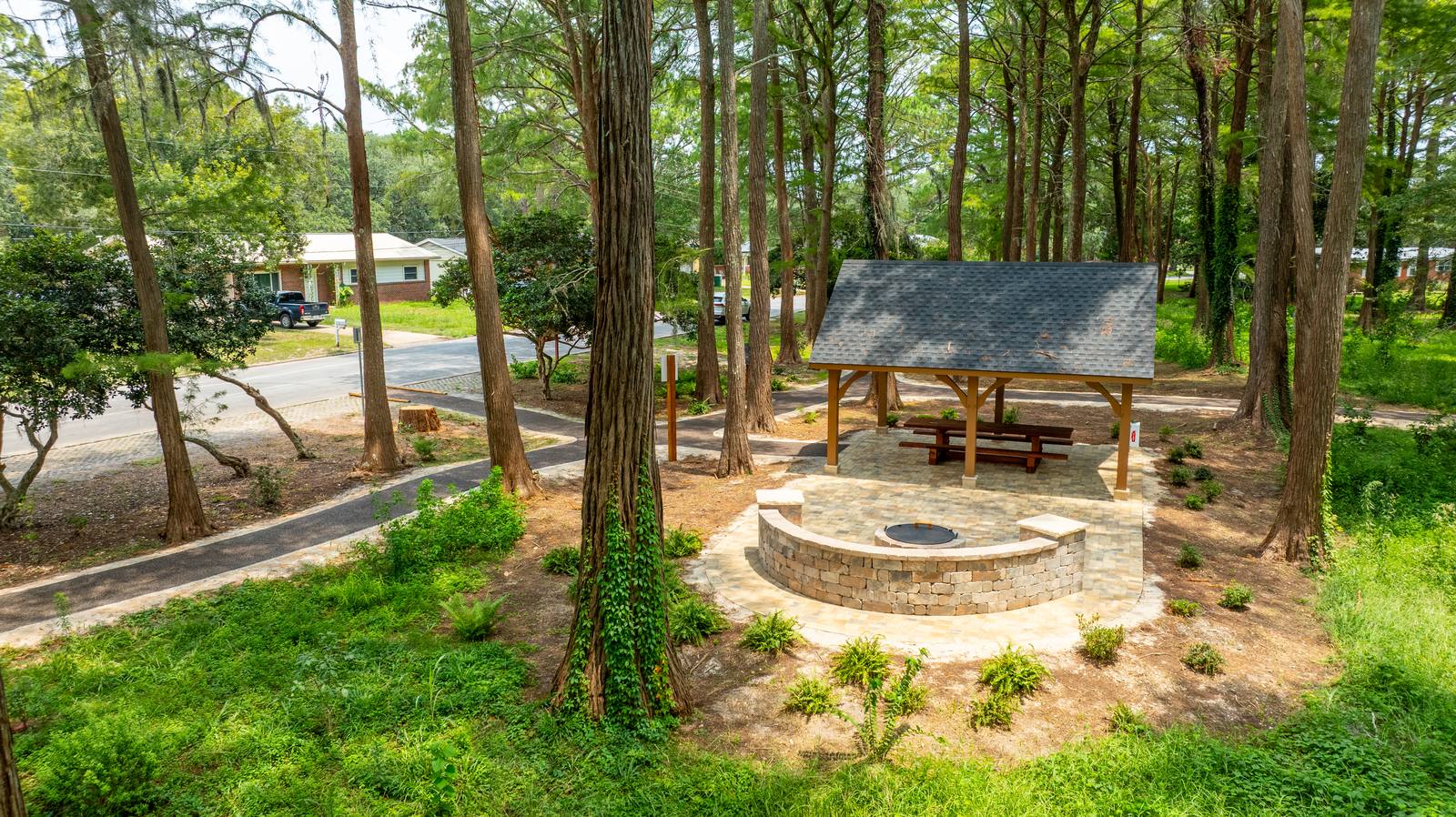
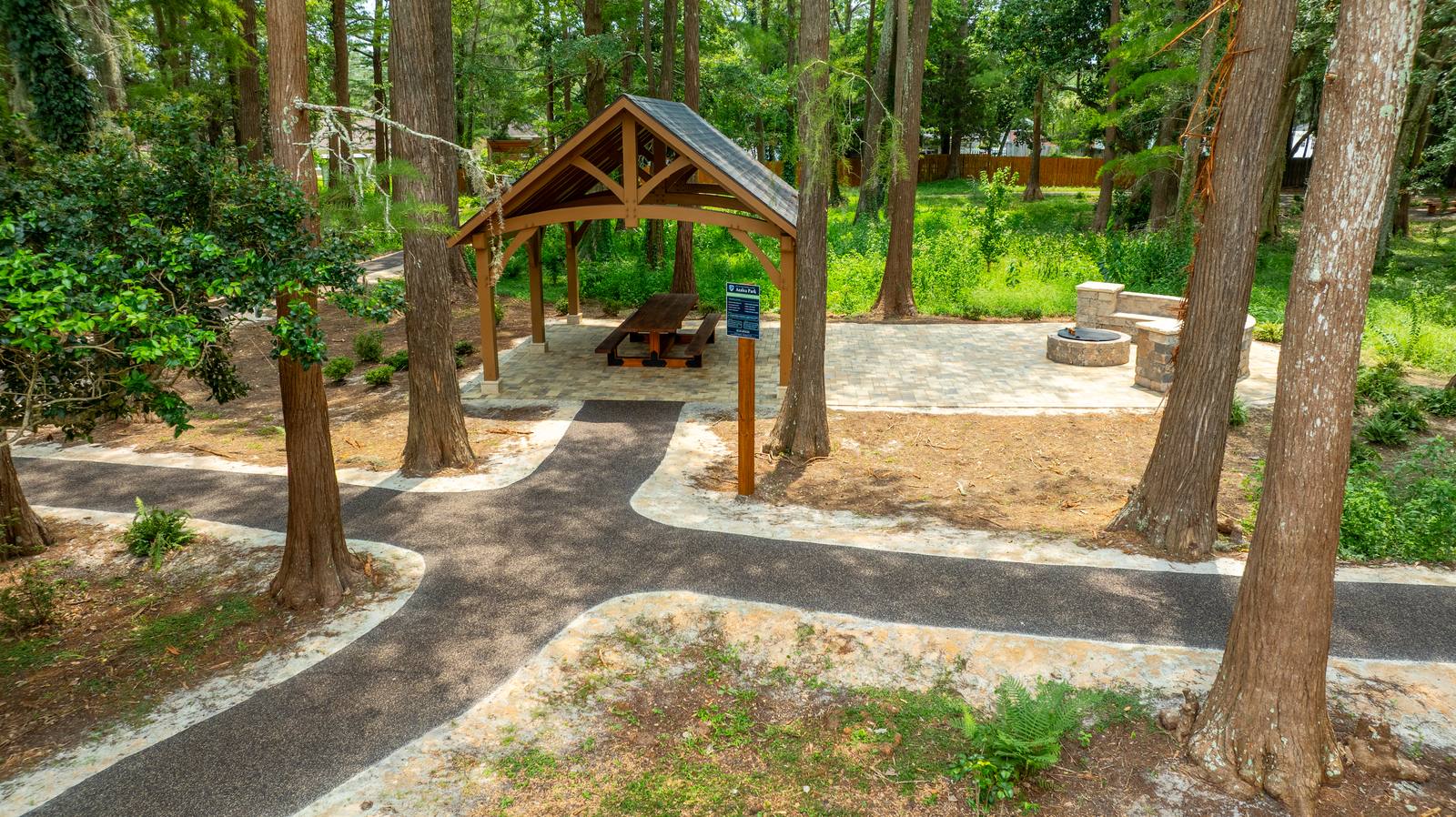
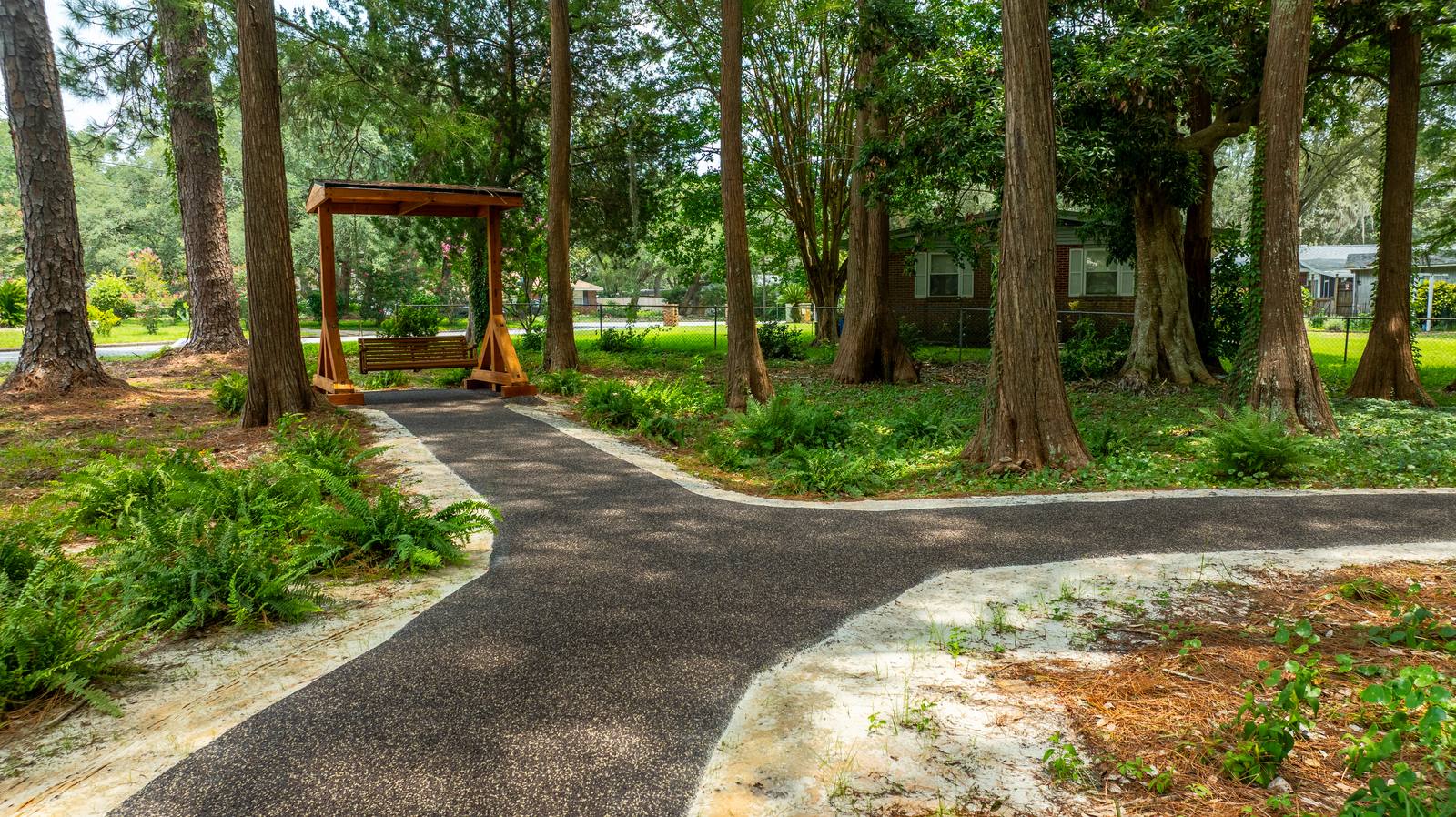
Azalea Park photographs
Drone frames by Emerald Coast Drone Pros, July 2026, and installation photographs. Read the case study.
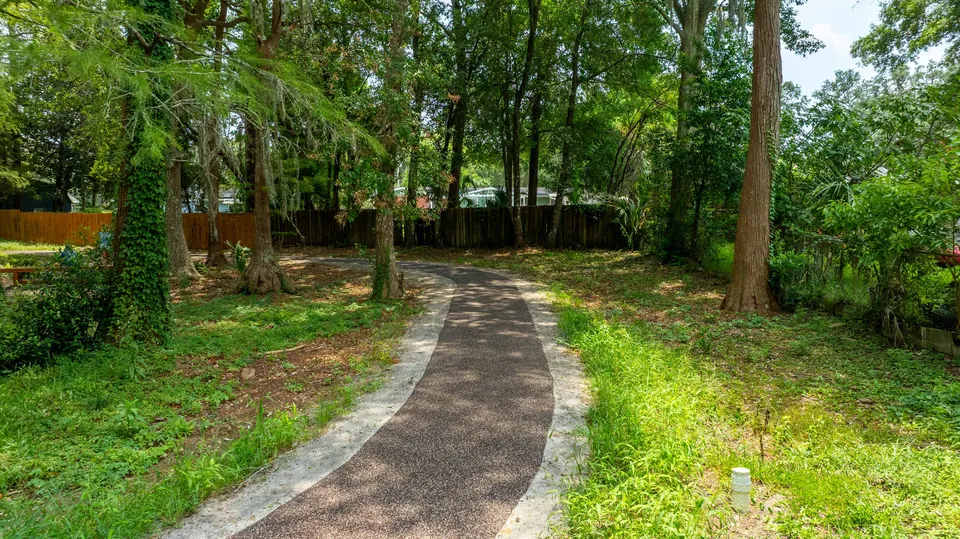
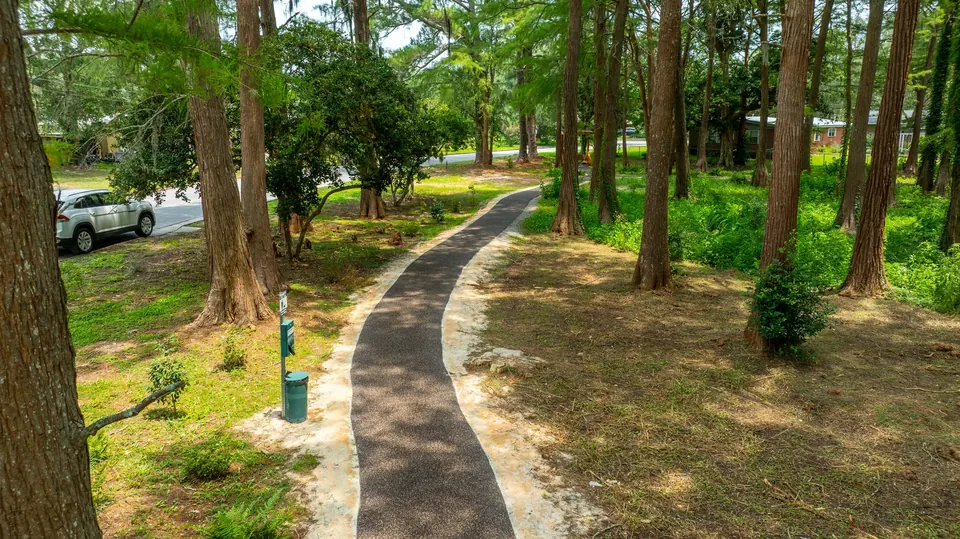
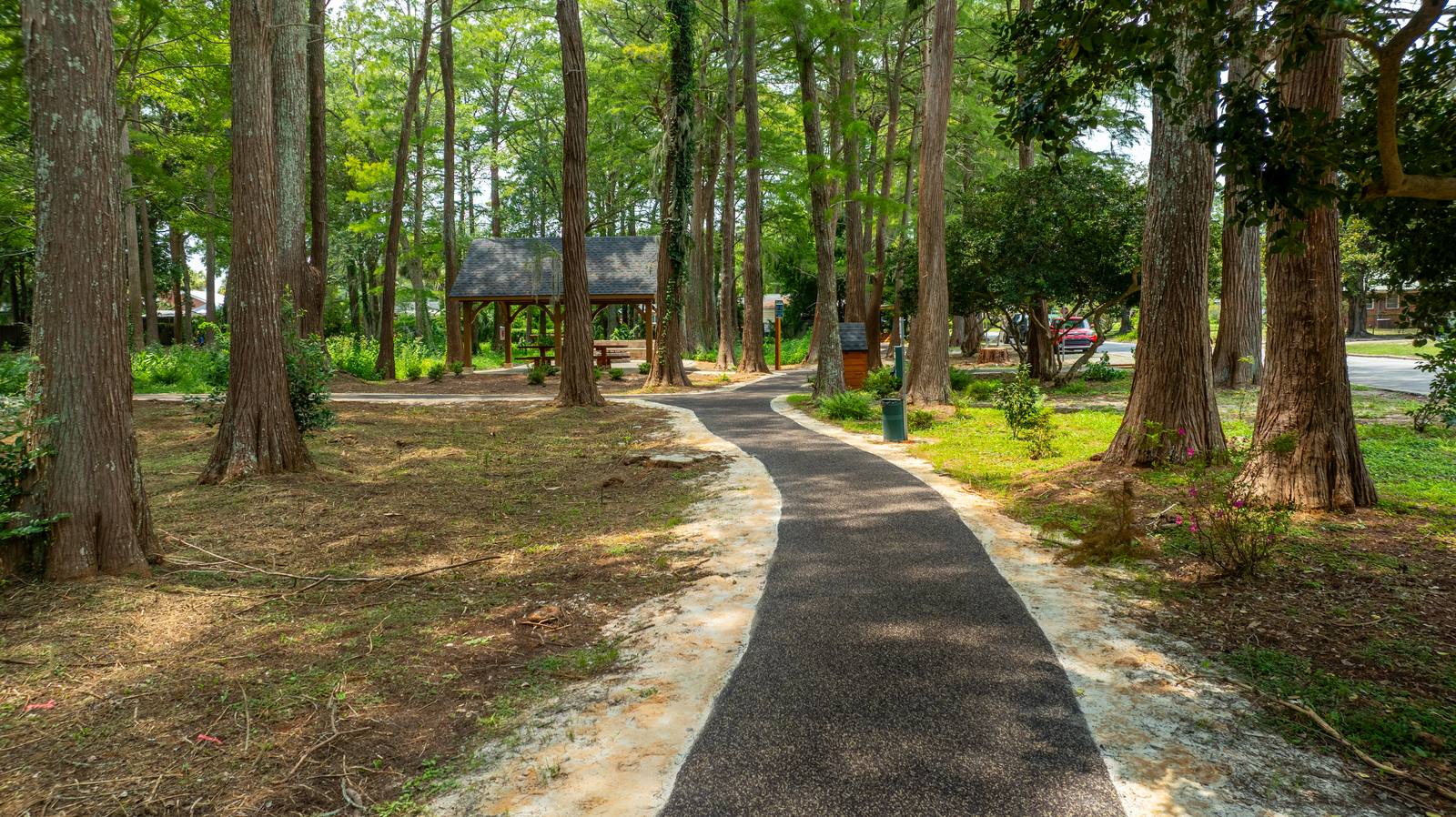
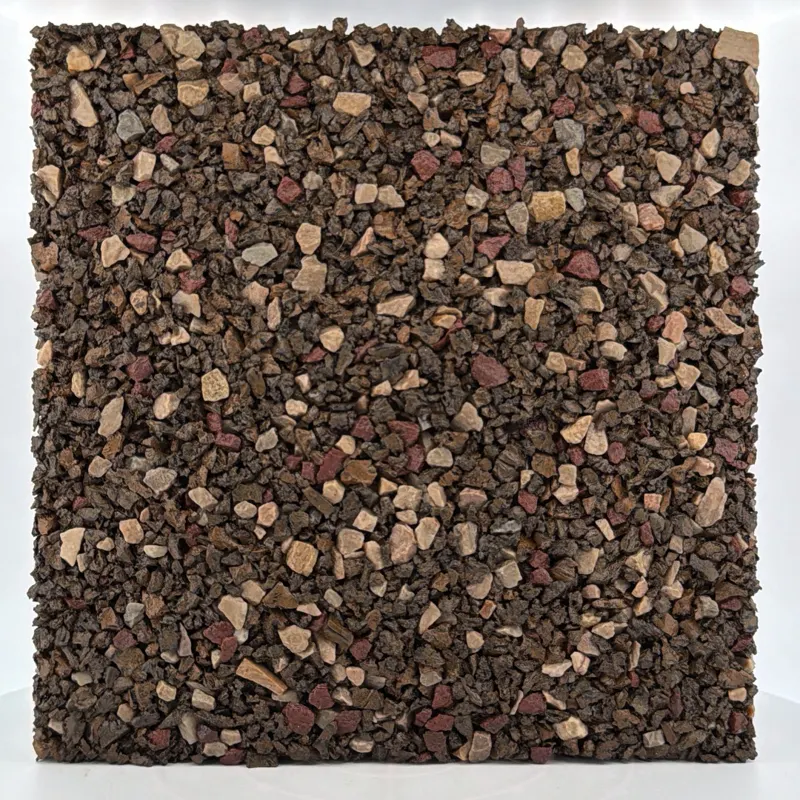
Representative palettes
Named on the AP cut sheet. These photographs are palette references, not project photos.
Mary Esther
City of Mary Esther, Florida. Azalea Park. AP-200, about 9,000 sf. Installed in spring 2026.
“The trail was well received by the public who commented on how it was better on their joints, but still able to support pedestrian and wheelchair access. It has also held up well to a Category 2 Hurricane and two small flood events since being installed in the spring of 2026.”
Public Works Director, City of Mary Esther, FL
Install guide, in short
AP and CP serve the same paths. The AP guide names botanical gardens, zoo paths, courtyards, campus circulation, and nature preserves as example settings. Base, slope, edges, mixing, and cure are in the PDF. Compliance with accessibility rules is the designer's responsibility. The guide says a properly installed surface may support ADA slope conditions, with a recommended maximum cross slope of 2 percent.