CP series · Civil Permeable Pavement
Civil-grade permeable pavement for municipal pedestrian routes
Civil-grade permeable pavement for municipal parks, trails, and greenways. ADA-aligned, stormwater BMP-rated, submittal-ready.
$14–$20/sf installed
>200 in/hr permeability target
15–20 yr design service life
ADA-aligned · ASTM E303 slip tested
CSI Div 32 spec available
Best fit
- Municipal parks and greenways
- Public trails and connectors
- Budget-conscious pedestrian routes
- Neutral blends for civic environments
What you specify
SeriesCP — Civil Pavement
Lifts1.5″ · 2.0″ · 2.5″
SurfaceStone + recycled SBR composite
BinderAromatic polyurethane
BaseOpen-graded aggregate
EdgeHard restraint preferred; rolled or beveled available
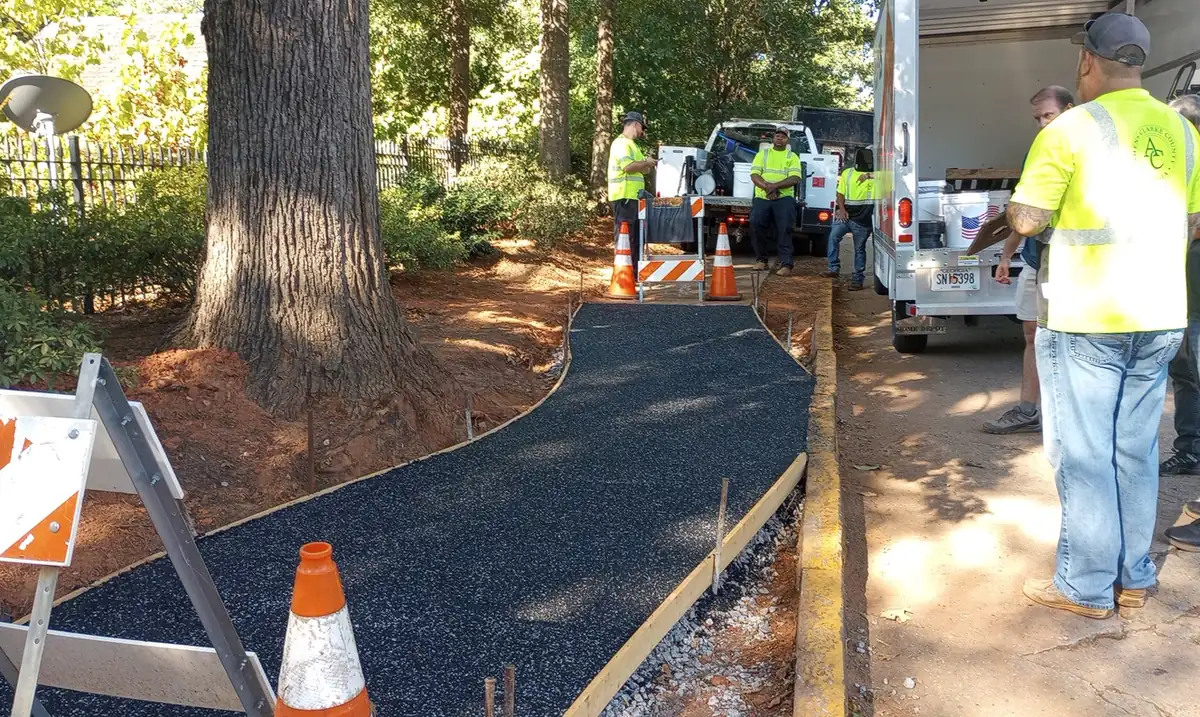
Installed work · CP-200
Root-intrusion sidewalk repair
Athens, Georgia. Flexus CP-200 replaced a concrete path that tree root intrusion had displaced. The path in this photograph runs around a large tree.
PlaceAthens, GA
SystemCP-200
CaseConcrete path replaced after root intrusion
Specifier FAQ
-
On a full installed basis — surface, labor, subbase, and drainage — CP runs $14–$20/sf vs. asphalt at $12–$20/sf and concrete at $18–$28/sf. CP is cost-competitive with concrete, and unlike asphalt or concrete, CP eliminates the need for separate stormwater infrastructure. On projects where permeability is required, that often changes the total cost picture significantly. Line-item estimate →
-
Yes. CP is firm, stable, and slip-tested per ASTM E303. Cross-slope must not exceed 2% — field conditions the specifier and contractor confirm, not the material alone.
-
CP drains vertically, removing the subsurface water that causes freeze-thaw heave. Our installed base is concentrated in the Southeast — we have limited field data in Zone 5 or colder climates. Consult us before specifying in harsh freeze-thaw environments.
-
CP is tested for pedestrian routes only. High-volume cycling is outside our tested parameters. Low-frequency cycling on a primarily pedestrian path is a different condition — contact us before specifying for mixed-use applications.
-
No crack sealing, no joint maintenance, no redistribution. Routine maintenance is debris clearing and edge restraint inspection. In high-silt areas, low-pressure rinsing restores permeability. Full protocol in the installation guidelines.
-
15–20 years in properly installed pedestrian applications. Based on binder performance data, ASTM G154 UV testing, and the 20+ year field history of rubber-bound aggregate surfaces in this category.
-
Yes. Division 32 spec language, editable for lift, base, and edge conditions. Included in the spec pack with product overview, installation guidelines, cross-sections, and all ASTM/EPA reports. Request spec pack →
Lift selection guide
Choose based on route type and traffic — not just budget.
CP-150
1.5″
Minimum specification lift
Secondary paths and light-duty routes
Light traffic, controlled base conditions. Least tolerance for substrate variation.
Specify CP-150 when
- Secondary connector or low-frequency path
- Substrate engineered and stable
- No service vehicles will ever cross
CP-200
Most specified
2.0″
Standard civil lift
Primary public trails and connectors
Handles sustained foot traffic and normal base variation. Right spec for most municipal projects.
Specify CP-200 when
- Primary public route or greenway connector
- Moderate to high foot traffic
- Municipal or parks department review
CP-250
2.5″
Heavy-use lift
High-traffic routes and variable base conditions
High traffic, variable base, or wide paths. More tolerance for site variability.
Specify CP-250 when
- Primary civic spine or major connector
- Variable or challenging base conditions
- Long-term maintenance reduction is the priority
Lift thickness does not substitute for base preparation. All three lifts require a properly graded open-graded aggregate base. Base depth is specified per project based on soil conditions and drainage requirements. See installation guidelines in the spec pack.
CP uses standardized neutral aggregate blends. For curated stone palettes and design-led environments, see AP series →
01 — Submittal package
Everything in one folder
Product overview, installation guidelines, cross-sections, and all ASTM and EPA test reports — one package. Request on the Resources page or contact us for a project-sealed copy.
02 — CSI specification
Ready to drop into a project manual
Division 32 spec language, editable for project-specific lift, base, and edge conditions. Available in the spec pack.
03 — Sample program
Evaluate before you spec
Physical samples at no cost. Choose your lift. Ships in 3–5 business days. Request a sample →